Build Your Career
with Master in Computer Application
Undergraduate and postgraduate expertise in programming, networking, systems, data science and AI at the best Master in Computer Application College in Nagpur.

About the Department
"MCA (Master in Computer Applications) is a professional master's degree in computer science. It focuses on providing a theoretical as well as practical training to students in the related field." Welcome to MCA Department of Raisoni college of Engineering and Management for degree and P.G Courses . We are dedicated to ensuring great careers for our students. There are several ways to present the canonical core of computer science which involves building deeper industry relations than before. Crafting a research culture from day one using the best technology's available is one of the basic techniques. Evolutions of technology changes rapidly over the years have industrialized to bridge the gap between theory - practice. Learning is a continuous process and does not end with the procurement of a degree. We ensure that our students are given a strong foundation in computer science with problem-solving techniques, and are made adaptable to changes.
We welcome you to the Computer Applications Department as undergraduate or post graduate student and we hope to be part of your success. Computers have captured the world. Today there is no single field were computers have not left a mark.. The department aims at IT based Learning, Development of Entrepreneurship among student and become a Centre of Excellence. The Department places high priority on establishing and maintaining innovative research programs that enhance the educational opportunity and encourage a broad base of extramural support to prepare future generations of computer professionals for long term careers in research, technical development and applications.

Vision & Mission
Our Vision
- To become a center of excellence in the field of Computer Applications that produces innovative, skillful, and socially responsible professionals who can contribute significantly to industry and research.
Our Mission
- To create the skilled persons in building software products, opportunities to take up Research Programs and to participate in design and development process in industries.
Apply Now
Meet Our HOD
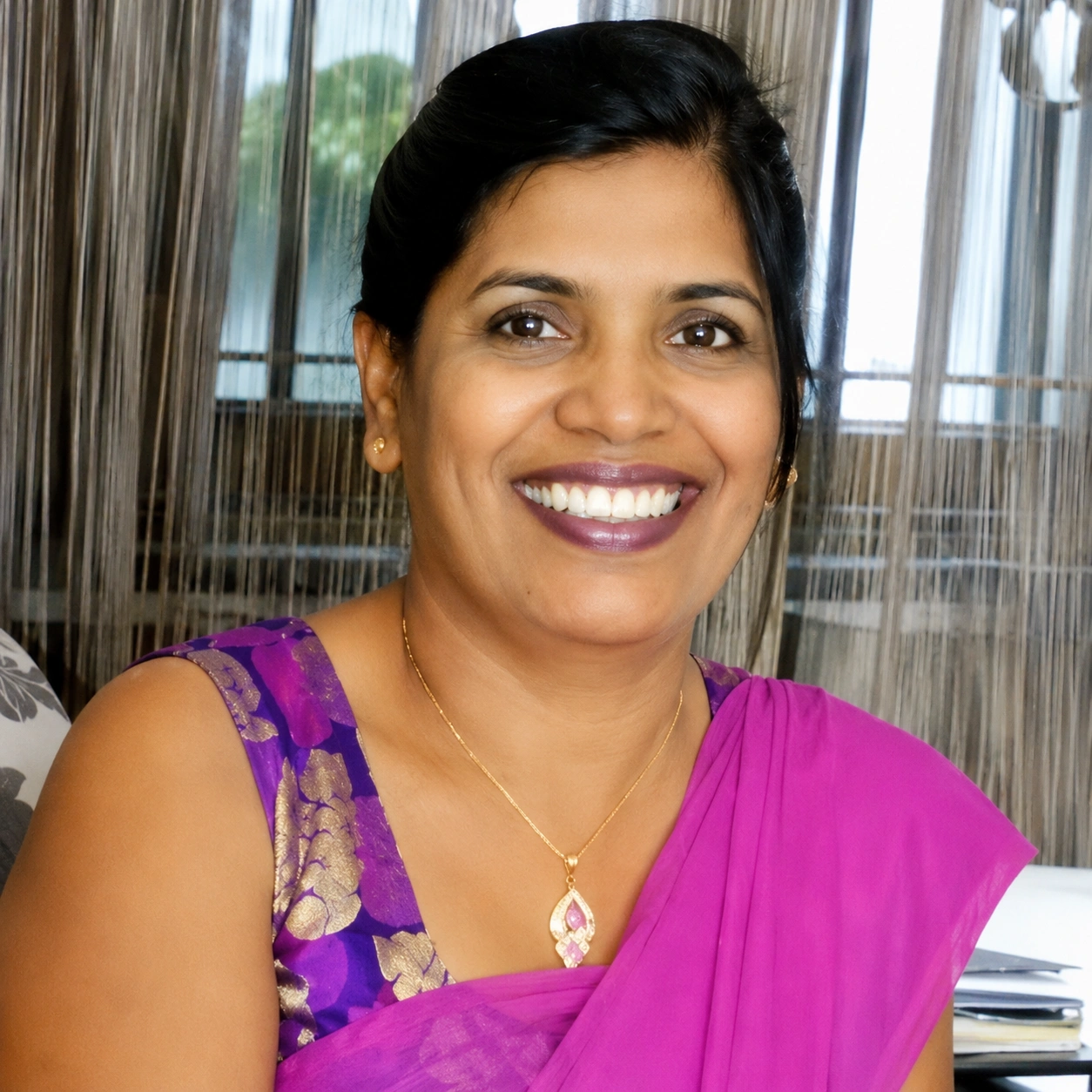
Dr. Sandhya Dahake is a Head of MCA Department at G H Raisoni Institute of Information Technology, Nagpur. Her research area includes Optimization Technique and Statistical Mathematics. She hold Post Graduation Diploma in Computer Science i.e. PGDCS and Master's Degree in Computer Science i.e. MCA. She has a 15 years of rich teaching and academic experience and 3 years of industrial experience. She has more than 15 publications in various UGC approved Journals and National and International conferences. She was a Member of Computer Society in India i.e. CSI.
Prior to this, she has a worked at various academic level positions in an College viz., IGNU Program Incharge, Exam Incharge and Admission Incharge and Coordinator for various Technical Events. She believes in learning and updating the knowledge and therefore keeps participating and attending many National and International Workshops/Seminars/Training Programs etc. She strongly believes in team work which can result in overall development of the department in terms of creativity and innovation.
PEO, PO and PSO
Programme Educational Objectives
- PEO-1: Preparation: To prepare students to succeed in employment/profession and/or to pursue post graduate and research educations in Mechanical Engineering discipline in particular and allied Engineering discipline in general.
- PEO-2: Core Competence: To provide students with a solid foundation in mathematical, scientific and engineering fundamentals required to formulate, analyse and solve engineering problems requiring knowledge of Mechanical Engineering.
- PEO-3: Breadth: To prepare students with engineering breadth to innovate, design, and develop software products and to contribute in providing solutions related to multidisciplinary real life problems.
- PEO-4: Professionalism: To inculcate in students professional and ethical attitude, effective communication skills and team work to become a successful professional.
- PEO-5: Learning Environment: To provide students with an academic environment that makes them aware of excellence and lifelong learning in emerging technologies.
Program Outcomes
- PO-1. Engineering knowledge: Apply the knowledge of mathematics, science, engineering fundamentals, and an engineering specialization to the solution of complex engineering problems.
- PO-2. Problem analysis: Identify, formulate, review research literature, and analyze complex engineering problems reaching substantiated conclusions using first principles of mathematics, natural sciences, and engineering sciences.
- PO-3. Design/development of solutions: Design solutions for complex engineering problems and design system components or processes that meet the specified needs with appropriate consideration for the public health and safety, and the cultural, societal, and environmental considerations.
- PO-4. Conduct investigations of complex problems: Use research-based knowledge and research methods including design of experiments, analysis and interpretation of data, and synthesis of the information to provide valid conclusions.
- PO-5. Modern tool usage: Create, select, and apply appropriate techniques, resources, and modern engineering and IT tools including prediction and modeling to complex engineering activities with an understanding of the limitations.
- PO-6. The engineer and society: Apply reasoning informed by the contextual knowledge to assess societal, health, safety, legal and cultural issues and the consequent responsibilities relevant to the professional engineering practice.
- PO-7. Environment and sustainability: Understand the impact of the professional engineering solutions in societal and environmental contexts, and demonstrate the knowledge of, and need for sustainable development.
- PO-8. Ethics: Apply ethical principles and commit to professional ethics and responsibilities and norms of the engineering practice.
- PO-9. Individual and team work: Function effectively as an individual, and as a member or leader in diverse teams, and in multidisciplinary settings.
- PO-10. Communication: Communicate effectively on complex engineering activities with the engineering community and with society at large, such as, being able to comprehend and write effective reports and design documentation, make effective presentations, and give and receive clear instructions.
- PO-11. Project management and finance: Demonstrate knowledge and understanding of the engineering and management principles and apply these to one's own work, as a member and leader in a team, to manage projects and in multidisciplinary environments.
- PO-12. Life-long learning: Recognize the need for, and have the preparation and ability to engage in independent and life-long learning in the broadest context of technological change.
Program Specific Outcomes
- PSO1: Apply knowledge in the field of Machine Design, Thermal and Manufacturing Engineering to solve engineering problems by utilizing advanced technology.
- PSO2: Prepare students for successful careers in industry that meets the needs of Industries.
- PSO3: Respond to the demand of the society by engaging in lifelong learning.
Scheme & Syllabus
| Title | Syllabus | Download/Details |
|---|---|---|
| SEM-I | Operating System | View |
| DBMS | View | |
| PHP | View | |
| DMGT | View | |
| OOP’s Using JAVA | View | |
| Technical Writing & Drafting Skills | View | |
| Soft skills | View | |
| SEM-II | Cloud Computing | View |
| C#.NET | View | |
| ORACLE & PLSQL | View | |
| Analysis of Algorithm | View | |
| System Analysis and Design | View | |
| Communication Skills | View | |
| SEM-III | Big Data Analysis | View |
| Parallel and Distributed Computing System | View | |
| Python Programming | View | |
| Artificial Intelligence & Expert System | View | |
| Cryptography and Network Security | View | |
| Business Communication | View | |
| Entrepreneurship Development | View | |
| SEM-IV | Major Project |
Academics & Department
Faculty List
Departmental Activity
Student Achievements and Awards
Faculty Achievements and Awards
Academic Calendar