B.Tech Computer Science Department of GHRCEMN, Nagpur has well-equipped Labs with the latest necessary software and hardware. The purpose of Software Development laboratories is to provide hands-on experience about different aspects of software engineering areas which exclusively includes identification, behavioural and structural design tools, implementation and coding IDEs, databases, embedded software development tools, embedded hardware design tools, testing, and verification tools.
Build Your Career
with Information Technology
Undergraduate and postgraduate expertise in programming, networking, systems, data science and AI at the best Information Technology College in Nagpur.

About the Department
Information Technology (IT) is the branch of engineering that deals with computers and telecommunications, developing and maintaining systems, and retrieving, storing, and transmitting information. The branch is responsible for the efficient operation of IT services and infrastructure and leads the corporation in using Information Technology as a strategic asset.
IT provides value to the corporation by enabling departments to provide service to citizens through technology. The emerging needs of the corporation are addressed through IT planning and innovation. Effective positioning and efficient leveraging of the information technology asset through the introduction of new approaches allow departments to meet their business needs through technology. IT Service Management Embedding continuous improvement as a practice, these core service monitors and reports on the performance of the Branch against industry-accepted standards and frameworks.

Vision & Mission
Our Vision
- To be a leading IT department, recognized for innovative education and impactful research.
- To cultivate technically proficient and ethically responsible IT professionals.
- To foster a dynamic learning environment that promotes creativity and lifelong learning.
- To be a catalyst for technological advancement and societal benefit through IT.
Our Mission
- To provide a high-quality, industry-relevant B.Tech program in Information Technology.
- To engage in cutting-edge research and development in emerging IT domains.
- To develop students' practical skills and problem-solving abilities through hands-on learning.
- To prepare students for successful careers and leadership roles in the IT industry.
Apply Now
Meet Our HOD
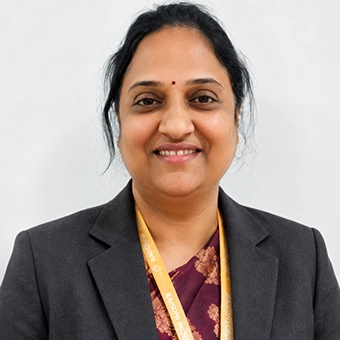
Dr. Sonali Ridhorkar
Professor and HOD
Dr. Sonali Ridhorkar received her PhD. Degree from Computer Science & Engineering Department, G.H.Raisoni College of Engineering, Nagpur, RTMNU, Nagpur University and M.Tech (CSE) and B.E (Computer Technology) degree from RTMNU, Nagpur. She Worked in G.H.Raisoni College of Engineering, Nagpur, for 14 years. She has authored many papers in International and national journals/conferences in the area of Cyber Security, Pattern Recognition, Network Security, Cryptography and Network Security, Wireless Communication, AdHoc Networking etc. Currently, she is Professor and Head of the Department of Information Technology of the best Information Technology engineering college in Nagpur- G H Raisoni Institute of Engineering and Management (Autonomous).
Her research area includes cybersecurity, Computer system security, network security and Operating system. She is the recipient of the IEDC grant, Best Teacher Award, Best PhD work Research Paper Award at ICETET-13. She has more than 16 years of teaching experience. She has more than 60 publications in Indexed journals and conferences. She has played a crucial role in e-learning, virtual laboratory implementation at GHRCE, Nagpur .She is a member of IEEE and IFERP and serves on the editorial and review board of a multitude of journals related to Computer Science. She believes in the fact that quality education is the key to developing a nation and in case we can percolate the same sentiment to all the students and make learning fun by bringing innovation to it.
Course & Admission Overview
B.Tech Information Technology
B.Tech Information Technology (B.Tech IT) is a 4-year undergraduate program that students can pursue after completing their 10+2 education. The program is offered by GH Raisoni College of Engineering and Management, Nagpur (GHRCEMN) and is designed to provide students with comprehensive knowledge of information systems, software development, computer networks, database management, and information security.
The B.Tech IT curriculum focuses on the application of computing technologies to solve real-world problems and support organizational decision-making. Students gain expertise in areas such as Programming, Web Technologies, Cloud Computing, Cybersecurity, Artificial Intelligence, Machine Learning, Data Analytics, Internet of Things (IoT), and Big Data Technologies.
Through practical laboratory sessions, industry-oriented projects, internships, and skill-development activities, students develop strong technical, analytical, and problem-solving abilities.
The program prepares graduates for successful careers as Software Engineers, Data Analysts, Cloud Engineers, Cybersecurity Professionals, System Administrators, IT Consultants, and Technology Entrepreneurs, enabling them to contribute effectively to the rapidly evolving information technology industry.
B.Tech Information Technology (IT) Eligibility Criteria
For admission to the B.Tech Information Technology (IT) program at GH Raisoni College of Engineering and Management, Nagpur (GHRCEMN), the candidate must have passed HSC (10+2) or its equivalent examination with Physics and Mathematics as compulsory subjects along with one of the following subjects: Chemistry, Biotechnology, or Technical Vocational subjects.
The candidate should have obtained at least 50% marks (45% marks for candidates belonging to Backward Class categories and Persons with Disability from Maharashtra State only) in the above subjects taken together. The candidate must also have appeared for MHT-CET and obtained a non-zero score, as per the prevailing admission rules of the Government of Maharashtra and the Competent Authority.
| Program Level | Name of Course | Course Type | Medium of Instruction | Sanctioned Intake |
|---|---|---|---|---|
| UG | Information Technology | Regular | English | 60 |
Placement
GHRCEMN, Nagpur has established a dedicated Training and Placement Cell that focuses on enhancing students' employability and career readiness. The cell conducts various training programs, including aptitude development, technical skill enhancement, coding practice, communication skills, personality development, mock interviews, and group discussion sessions.
To facilitate excellent placement opportunities, the institute collaborates with more than 200 reputed companies and organizations across diverse sectors such as Information Technology, Software Development, Cloud Computing, Data Analytics, Cybersecurity, and Consulting. Many leading recruiters regularly visit the campus for internship and placement drives, providing students with opportunities to begin successful professional careers.
Why Choose B.Tech Information Technology at GHRCEMN?
If you are looking for a leading institution to pursue B.Tech Information Technology (IT) in Nagpur, GHRCEMN offers a strong academic foundation, modern laboratories, industry-oriented curriculum, experienced faculty, and excellent placement support.
The program equips students with the knowledge and practical skills required in emerging domains such as Artificial Intelligence, Machine Learning, Data Science, Cloud Computing, Cybersecurity, Internet of Things (IoT), and Software Engineering, enabling them to excel in the rapidly evolving IT industry.
Program Educational Outcomes (PEO)
After completion of the B.Tech. (IT) course, students will be able to:
- PEO1: Demonstrate core competence in basic engineering and mathematics to design, formulate, analyze, and solve hardware/software engineering problems.
- PEO2: Develop insight in fundamental areas of Information Technology and related engineering with an inclination towards self-learning to address real-world problems using digital and cognitive technologies.
- PEO3: Collaborate with industry, academic, and research institutions for state-of-the-art product development and research.
- PEO4: Inculcate a high degree of professionalism, effective communication skills, and team spirit to work on multidisciplinary projects in diverse environments.
- PEO5: Practice high ethical values and technical standards.
Program Outcomes
Engineering Graduates will be able to:
- 1. Engineering knowledge: Apply the knowledge of mathematics, science, engineering fundamentals, and an engineering specialization to the solution of complex engineering problems.
- 2. Problem analysis: Identify, formulate, review research literature, and analyze complex engineering problems, reaching substantiated conclusions using first principles of mathematics, natural sciences, and engineering sciences.
- 3. Design/development of solutions: Design solutions for complex engineering problems and design system components or processes that meet the specified needs with appropriate consideration for the public health and safety and the cultural, societal, and environmental considerations.
- 4. Conduct investigations of complex problems: Use research-based knowledge and research methods, including design of experiments, analysis and interpretation of data, and synthesis of the information to provide valid conclusions.
- 5. Modern tool usage: Create, select, and apply appropriate techniques, resources, and modern engineering and IT tools, including prediction and modeling to complex engineering activities with an understanding of the limitations.
- 6. The engineer and society: Apply reasoning informed by the contextual knowledge to assess societal, health, safety, legal, and cultural issues and the consequent responsibilities relevant to the professional engineering practice.
- 7. Environment and sustainability: Understand the impact of the professional engineering solutions in societal and environmental contexts, and demonstrate the knowledge of, and need for sustainable development.
- 8. Ethics: Apply ethical principles and commit to professional ethics and responsibilities and norms of the engineering practice.
- 9. Individual and team work: Function effectively as an individual, and as a member or leader in diverse teams, and in multidisciplinary settings.
- 10. Communication: Communicate effectively on complex engineering activities with the engineering community and with society at large, such as, being able to comprehend and write effective reports and design documentation, make effective presentations, and give and receive clear instructions.
- 11. Project management and finance: Demonstrate knowledge and understanding of the engineering and management principles and apply these to one's work, as a member and leader in a team, to manage projects in multidisciplinary environments.
- 12. Life-long learning: Recognize the need for and have the preparation and ability to engage in independent and life-long learning in the broadest context of technological change.
Program-Specific Outcomes
Engineering Graduates will be able to:
- PSO1: Apply fundamental knowledge of Computer Science and Engineering subjects, identify, formulate, & Solve problems of various types of integrated computer-based systems, as well as interpret and synthesize the experimental data leading to valid conclusions.
- PSO2: Design and code engineering problems using programming skills.
- PSO3: Make use of acquired technical knowledge for qualifying in competitive examinations at various levels.
Labs
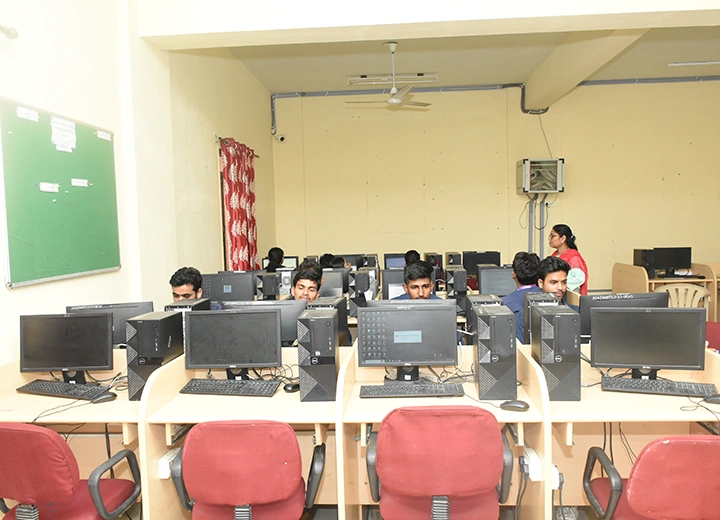
Data Structure and Algorithm Lab
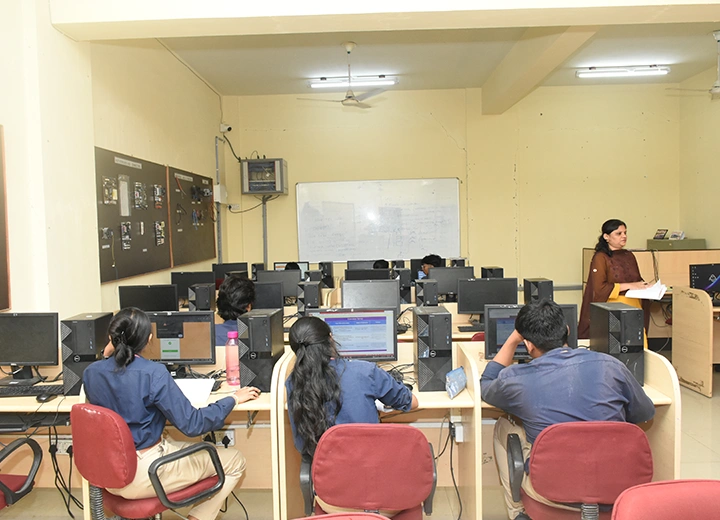
Computer Network Hardware Lab
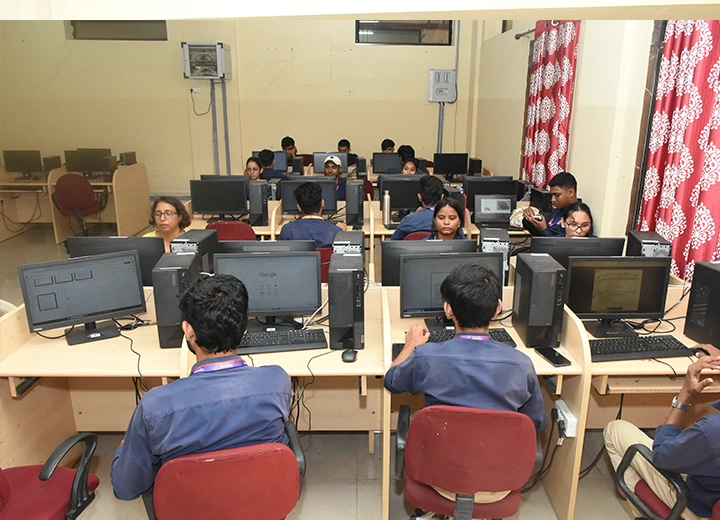
Programming Lab
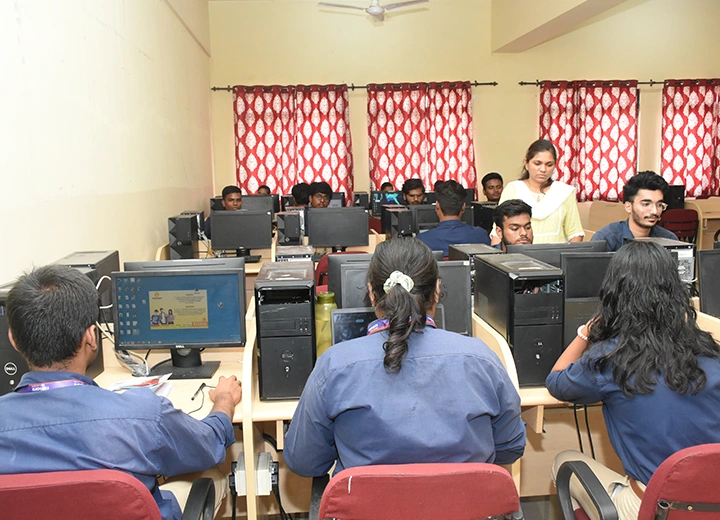
Operating System Lab
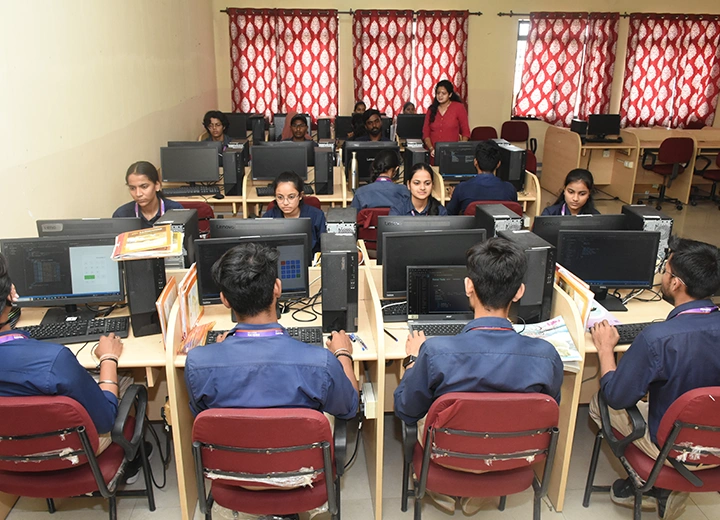
DBMS Lab
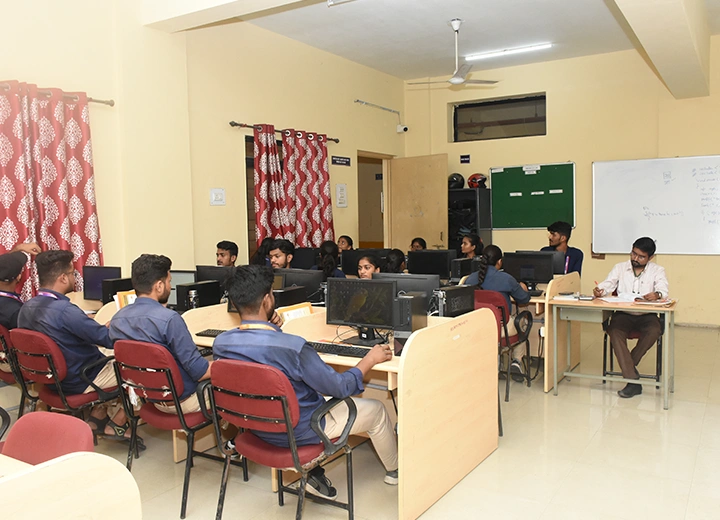
Project Lab
Academics & Department
Faculty List
Student Achievements
Faculty Achievements
Departmental Activities
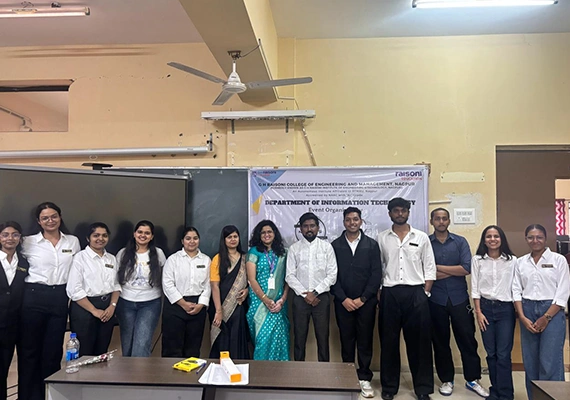
AI Cinematic
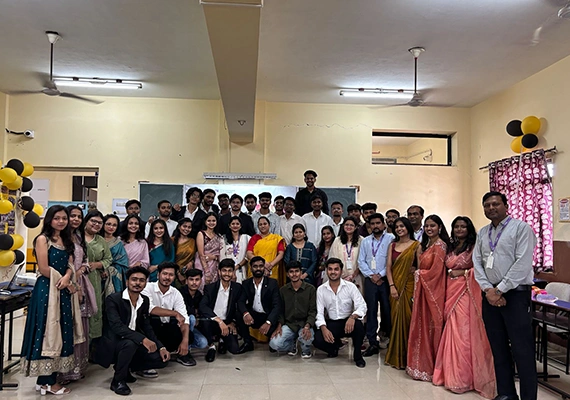
Farewell
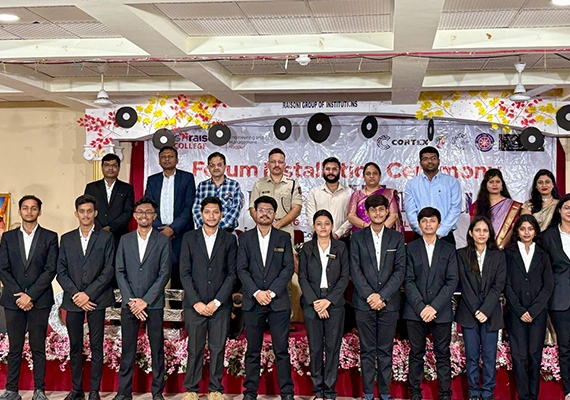
Forum Installation 25-26
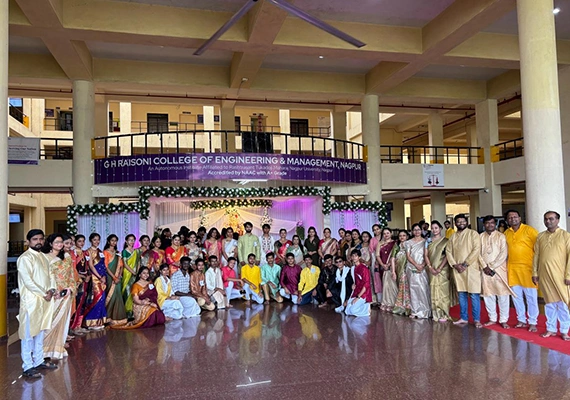
Heritage Walk
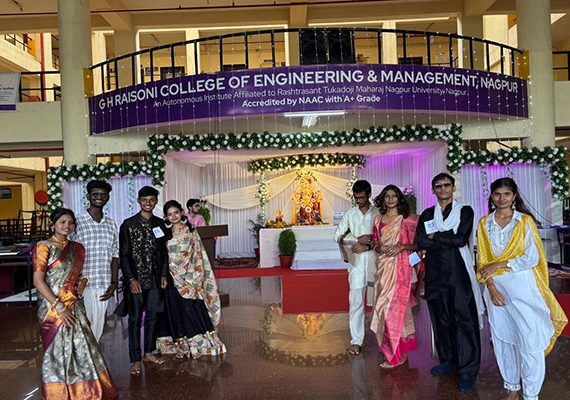
Heritage Walk
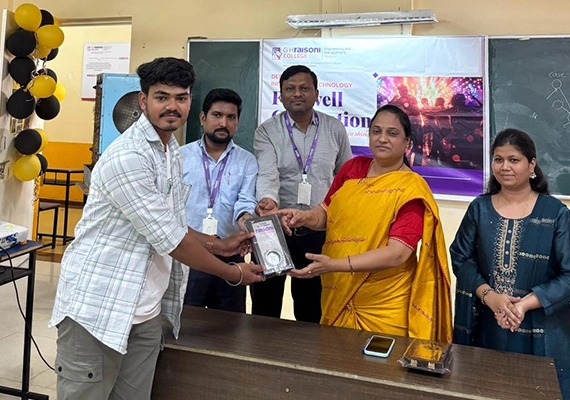
Topper Prize Distribution